
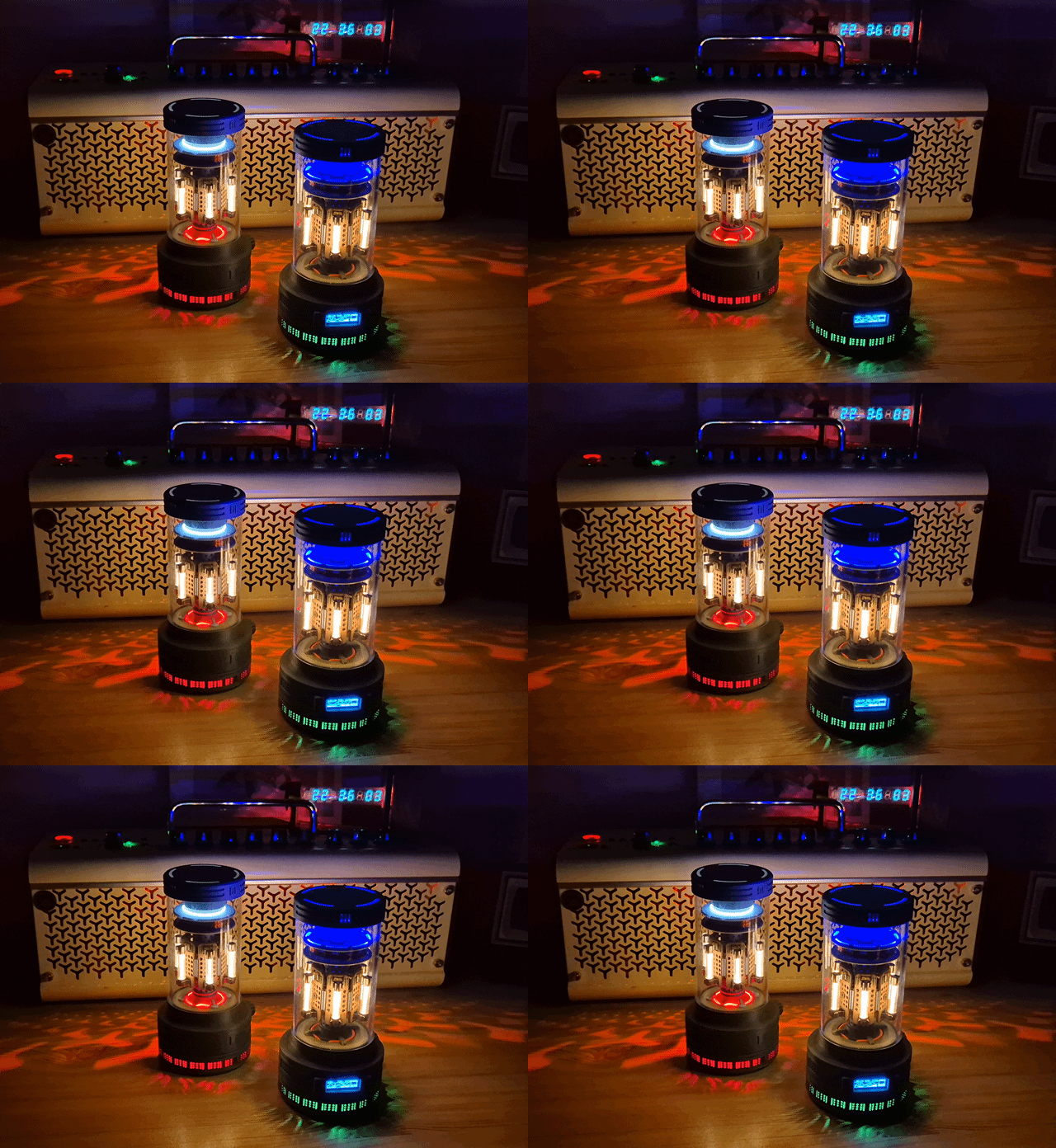
A personal exploration of electronics, mechanics, and cinematic storytelling through a functional sci-fi desk lamp prop.
13.01.2026
Contents
Introducción
There are projects that start with a clear goal, and others that start with a question.
This one started with a feeling.
While watching the complete Star Wars saga for the first time together with my kids, I found myself paying attention not only to the story, but to the objects that quietly populate those worlds: control panels, glowing cores, interfaces that don’t explain themselves, but feel alive.
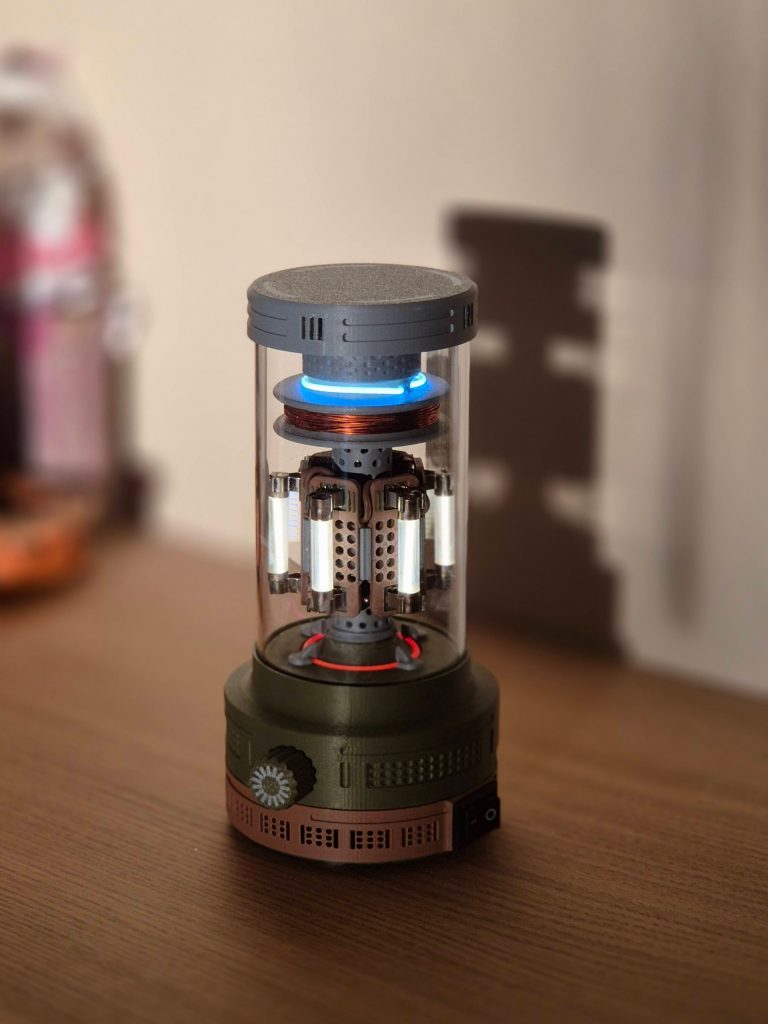
This project is an attempt to bring a small piece of that cinematic language into the real world — not as a replica, but as an original object, a sci-fi desk lamp that behaves like something that could exist in a science-fiction universe.
What this project is (and what it is not)
This is not meant to be a practical desk lamp in the traditional sense.
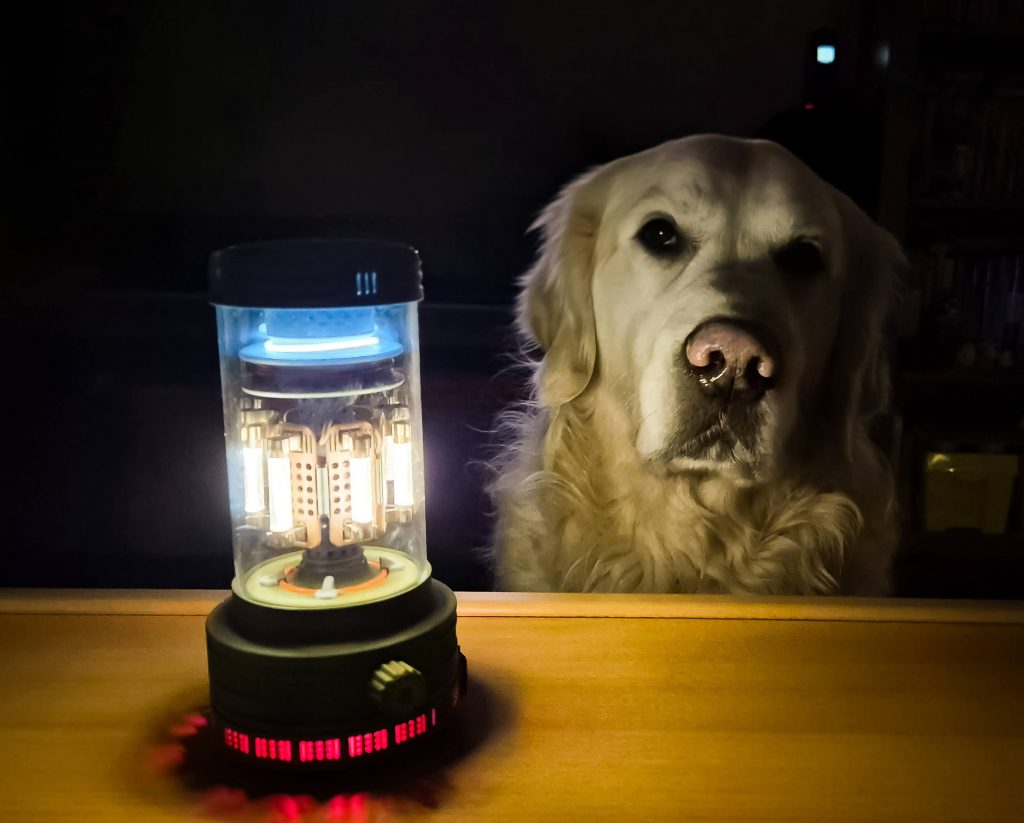
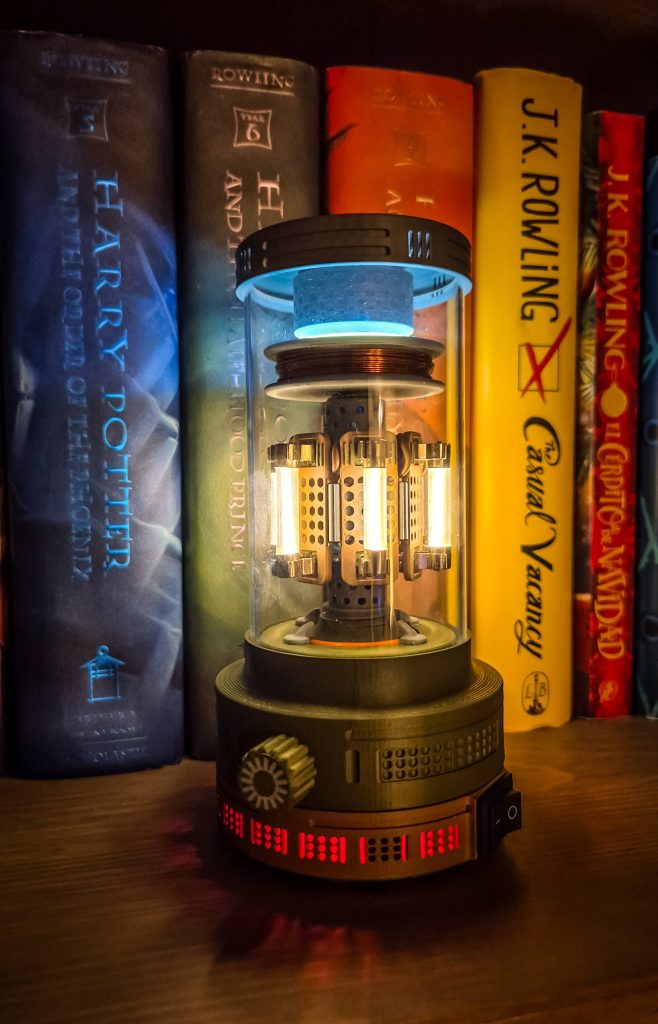
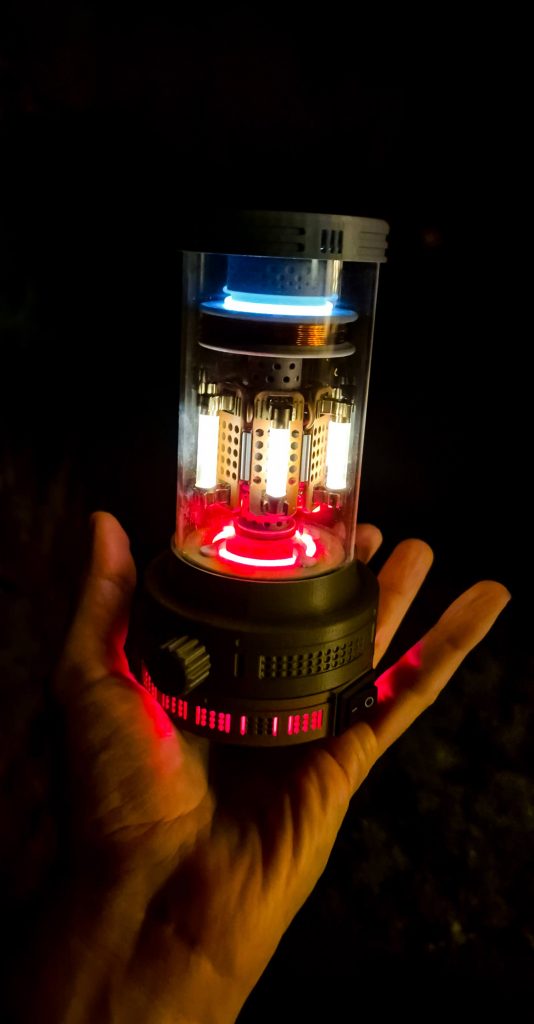
It is an experimental sci-fi desk prop — a fictional energy core designed to sit on a desk, glow, breathe, stabilize, and quietly suggest that something complex is happening inside.
The goal is plausibility, not realism.
Much like cinematic props, the object does not explain itself. Instead, it communicates through light, rhythm, and behavior.
Light as behavior, not just illumination:
One of the defining aspects of this project is how it behaves when powered on.
Instead of a simple on/off state, the lamp follows a short startup sequence:
- internal elements initialize,
- light levels fluctuate,
- different components settle at their own rhythm.
Some elements “breathe”, others flicker subtly, and not all parts behave in perfect sync.
The intention is to suggest energy regulation rather than decoration — a system finding equilibrium.
This kind of visual storytelling is common in film props, where behavior sells the fiction more than surface detail.
Design and iteration
The project has gone through multiple iterations.
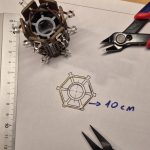
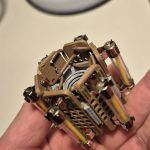
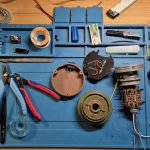
Each version of the sci-fi desk lamp focuses on improving a different aspect:
- mechanical structure and proportions,
- internal light diffusion,
- material choices and surface finish,
- interaction and feedback.
The project is powered by a Raspberry Pi Pico, chosen for its flexibility and small footprint.
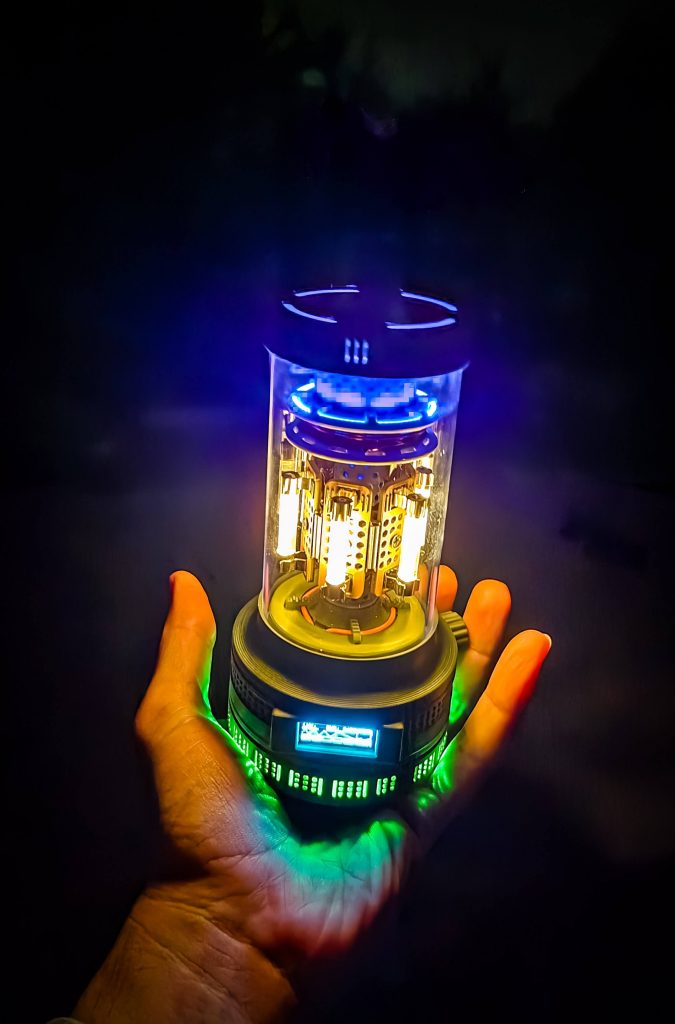
In the second iteration, a small OLED display was introduced.
Not as a user interface in the traditional sense, but as another narrative element — displaying abstract system states, progress bars, and diagnostic-style information that reinforces the illusion of an active core.
A multidisciplinary sci-fi desk lamp
This project sits at the intersection of several disciplines:
- electronics,
- mechanical design,
- embedded software,
- visual design,
- and narrative intent.
None of these elements alone define the object.
It is their combination — and how they influence each other — that gives the project its character.
At this stage, the project is still a prototype.
However, the response from the community has shown that there is interest not only in the object itself, but in the idea behind it: functional objects that borrow the language of science fiction without being replicas.
By sharing this work publicly, I’m interested in:
- connecting with like-minded creators,
- exploring potential collaborations,
- and opening the door to sponsorships or partnerships that align with this kind of experimental design work.
What’s next
A third iteration of the sci-fi desk lamp is already in progress.
Future changes will focus on:
- rethinking user interaction,
- refining the visual language even further,
- and exploring how much “story” an object can convey without saying a word.
Closing
This project is not about nostalgia, nor about copying a known universe.
It’s about borrowing a design language — and asking how far it can be pushed in a real, physical object.
More updates soon.

